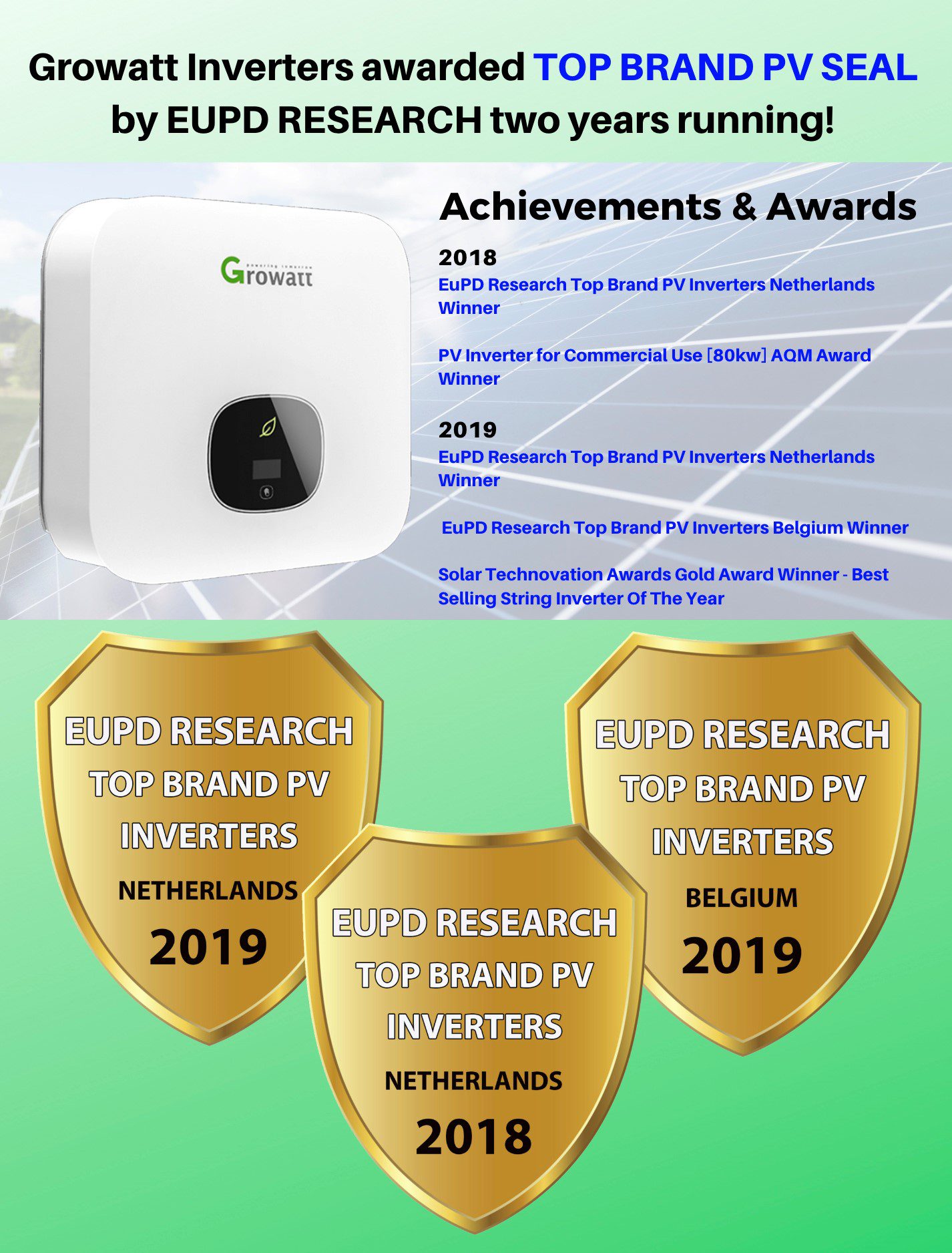
Solar Inverters
When it comes to Solar Inverters, it pays to stick to well known and proven brands. The reason being that solar inverters have a higher chance of failure than any other component in a solar system. They are infact the heart of your solar system. Warranty of the inverters is therefore very important criteria to look for.
Fronius
One of the best brands around is undoubtedly Fronius. They are made in Europe, have a 10 year warranty and have proven to perform well in Australian conditions. It is for this reason these inverters are always in short supply, espeicially towards the end of the year. CTS has built solid relationships with multiple suppliers, so our warehouses are always stocked with the latest Primo and Symo models.
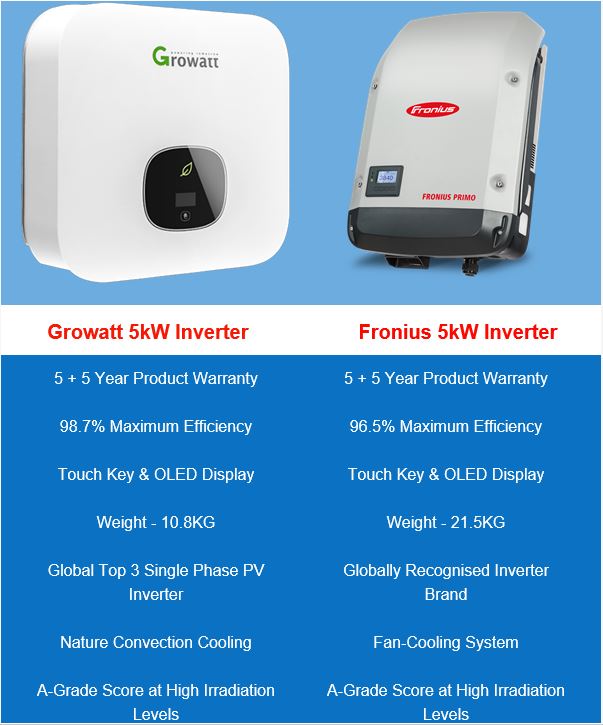
See some interesting comparison between the two inverters below:
Growatt
Another inverter that is rapidly gaining market share in Australia is Growatt. The new model of Growatt has a sleek design, half the weight of Fronius inverter and has no noise due to natural convection cooling technology (as opposed to fan cooling in Fronius). These attractive features at a competitive price combined with a 10 year warranty seems to be taking the shine out of Fronius inverters in the Australian market at the moment. Globally, Growatt is also a leading inverter manufacturer.